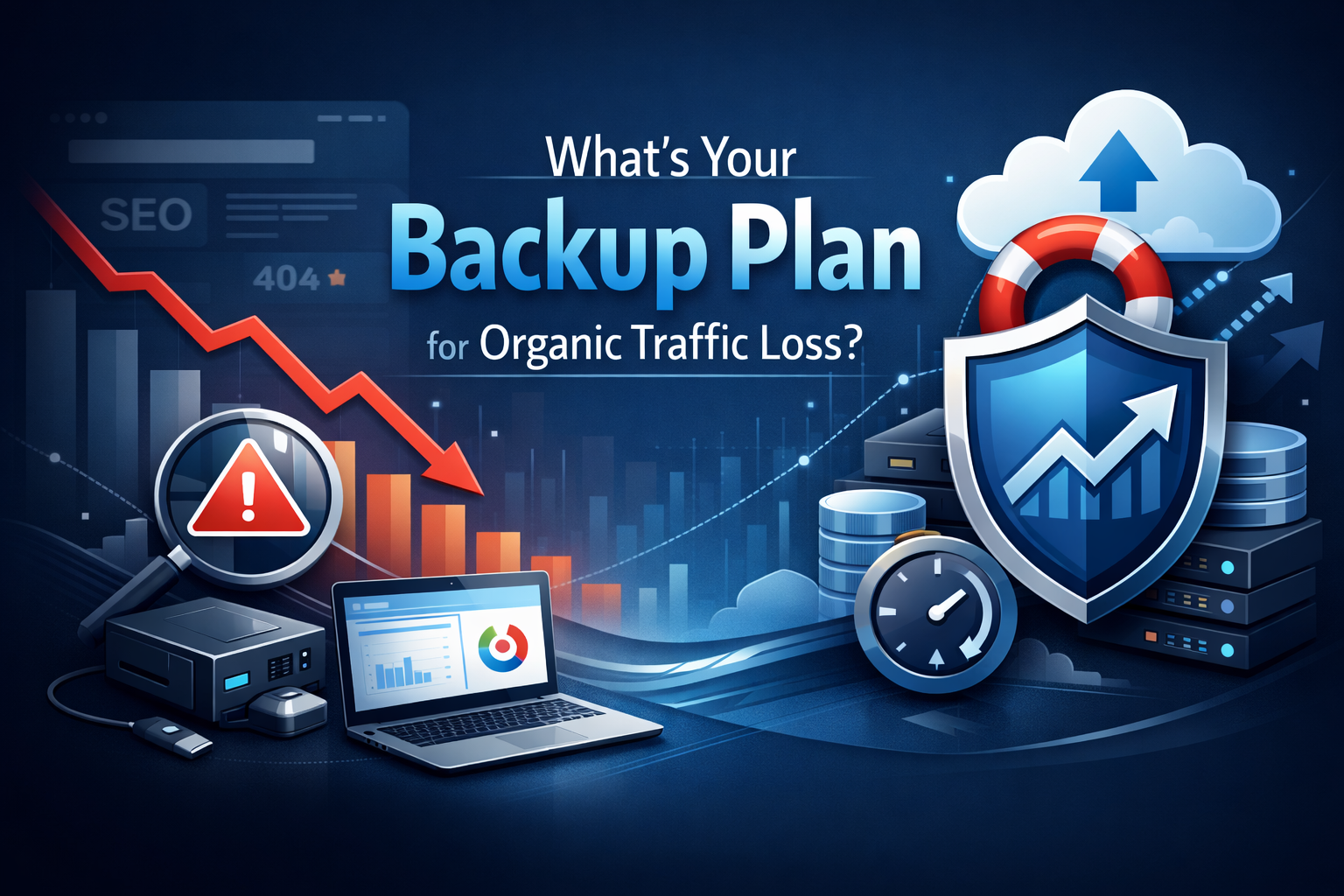
What’s Your Backup Plan for Organic Traffic Loss?
Let me ask you something most marketers avoid thinking about: what happens to your revenue when your organic traffic drops?
If you don’t have a clear answer, you’re not alone — but you are at risk.
Algorithm updates, AI-generated search results, zero-click answers, and increasing competition mean that organic traffic is no longer the guaranteed growth engine it once was. And yet, most businesses still treat traffic as their single most important metric.
Here’s the thing: traffic and revenue are not the same thing. If you’ve been following my SEO strategies and growth insights, you’ll know I always say, it’s not about how many people visit your site, it’s about what they do when they get there.
The Math That Changes Everything
Let’s talk numbers, because this is where most marketing strategies fall apart.
Most companies obsess over traffic. Very few optimize for conversions. But here’s the equation that should make you rethink your entire strategy:
Going from a 2% to a 3% conversion rate = 50% more conversions. Zero extra traffic needed.
That’s not a small gain. That’s 50% more leads, 50% more sales, 50% more revenue — from the exact same number of visitors.
Now flip it: to achieve the same result through traffic alone, you’d need to grow your audience by 50%. That could take months of content creation, backlink building, and technical SEO work. A conversion rate optimization (CRO) project? That can happen in weeks.
The lesson: a 1% conversion lift is worth more than a 10% traffic increase. Every time.
Why Organic Traffic Is Becoming Unreliable
Google’s landscape in 2026 looks very different from even two years ago. AI Overviews now answer queries directly in the search results. Featured snippets, People Also Ask boxes, and zero-click searches are eating into click-through rates across nearly every industry.
If you’re investing heavily in SEO without a conversion and diversification strategy underneath it, you’re building on shaky ground.
In my SEO roadmap for sustainable growth, I outline why long-term SEO success requires more than rankings — it requires a system that converts and retains. This is that system.
4 High-Impact Strategies to Grow Revenue Without Relying on Traffic
1. Conversion Rate Optimization (CRO): Your Highest-ROI Lever
CRO is the most underutilized growth strategy in digital marketing. Most businesses have never run a structured conversion audit — meaning they’re leaving money on the table with every single visitor.
Where to start:
- Identify your top 3 drop-off points in Google Analytics (checkout, landing pages, contact forms)
- A/B test your headlines, CTAs, and button colors
- Improve page speed — every second of delay reduces conversions by an average of 7%
- Use heatmaps (Hotjar, Microsoft Clarity) to see where users are actually clicking
Small changes compound fast. A 0.5% improvement across multiple pages can dramatically shift your bottom line without spending a cent on ads.
2. Citations Over Clicks — The New SEO Metric
Here’s a shift most marketers haven’t caught up with yet: in the age of AI search, being cited matters more than being clicked.
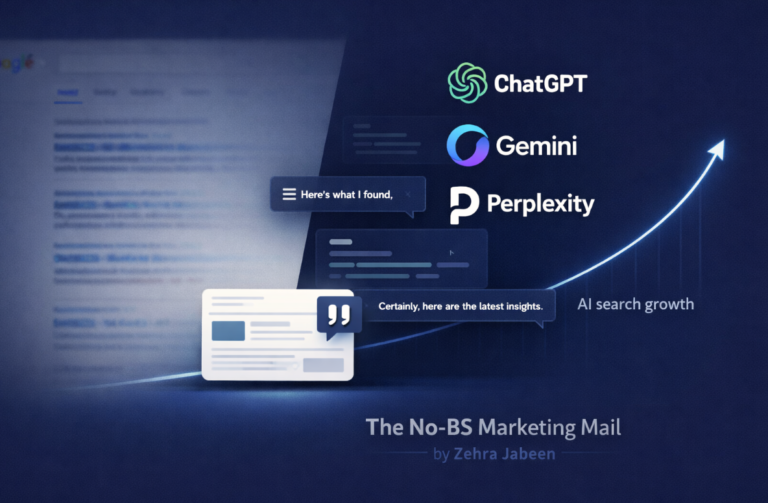
When someone asks ChatGPT, Perplexity, or Google’s AI Overview a question, the answer draws from authoritative sources. If your content is structured clearly, answers questions directly, and demonstrates genuine expertise, you become a cited source — even if the user never visits your site.
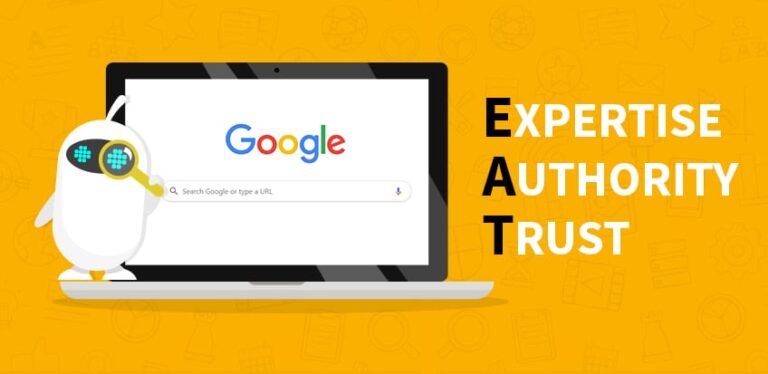
This is what Google’s E-E-A-T framework is built for. I covered this in depth in my Google E-A-T formula for content success — building expertise, authority, and trustworthiness into your content is now essential for AI-era visibility.
Practical steps:
- Use FAQ sections with direct, concise answers
- Add structured data markup (Schema.org) to your pages
- Write for humans first, algorithms second
- Build topical authority by covering your niche comprehensively
3. Social Commerce: Where Your Customers Already Are
TikTok Shop grew 407% last year. Instagram, Pinterest, and YouTube are all building native commerce features. The era of sending people away from social platforms to buy is ending — and smart brands are adapting.
Social media marketing in 2026 isn’t just about brand awareness. It’s a full-funnel revenue channel. If you’re not experimenting with shoppable content, product-led short-form video, and platform-native purchasing, you’re handing customers to competitors who are.
Start with one platform where your audience is most active. Build one shoppable content format. Measure conversions, not just engagement. Then scale what works.
And if your content isn’t converting on social? I’d recommend reading why your content isn’t getting engagement — the reasons might surprise you.
4. Retargeting: Your Highest-ROAS Paid Ad Strategy
If you’re running paid ads and putting most of your budget toward cold audiences, stop.
Retargeting delivers 4–5x ROAS compared to cold traffic. People who’ve already visited your site, engaged with your content, or added items to cart are dramatically more likely to convert. They already know you. You’re just giving them a reason to come back.
As a media buying specialist, retargeting is one of the first strategies I implement for every client. It’s not glamorous, but it consistently outperforms prospecting campaigns — especially when organic traffic is soft.
Key retargeting tactics:
- Segment audiences by behavior (page visited, time on site, content consumed)
- Use dynamic ads that show products or services users already viewed
- Cap frequency to avoid ad fatigue (3–5 impressions per user per week)
- Test different offer angles for warm vs. hot audiences
Your 30-Day Action Plan
You don’t need to overhaul everything at once. Here’s a focused 30-day plan to start shifting from traffic dependency to conversion-led growth:
Week 1 — Audit
Map your conversion funnel. Identify where users drop off. Install a heatmap tool if you don’t have one.
Week 2 — Quick CRO Wins
Rewrite your top landing page headline. Add a clear CTA above the fold. Improve your page load speed. Run an A/B test.
Week 3 — Paid & Retargeting
Set up or optimize retargeting audiences in Meta and Google. Shift 20–30% of cold traffic budget to retargeting.
Week 4 — Content & Visibility
Publish one piece of AI-optimized content with FAQ schema. Start tracking branded mentions and citations, not just organic traffic.
The Bottom Line
Organic traffic loss doesn’t have to mean revenue loss — not if you’ve built a smarter marketing system underneath it.
The real backup plan isn’t more traffic. It’s better conversion, diversified visibility, and meeting your customers where they already are.
If you want to talk through how this applies to your business specifically, I offer free 30-minute strategy calls where we can map out exactly where your growth opportunities are.
About the Author
Zehra Jabeen is a performance marketer and digital marketing strategist with 6+ years of experience managing $100K+ in ad spend across Meta, TikTok, LinkedIn, and Google Ads. She helps businesses scale with data-driven paid media, SEO, and marketing automation.